What one person actually goes through. Twenty minutes, start to read.
No quiz, no self-rating, no certificate. A conversation about the work they already do, one hands-on piece where they use AI on a real brief, and then a read they own. These are the actual screens.
It already knows the job. That is why the conversation is short.
What this function does, at this seniority, in a company this size.
Which AI licences you already pay for, and who has been given which.
How the week is actually shaped, stage by stage, and what good looks like at each one.
Every conversation already held with people doing this same job, so the bar is real rather than invented.
A generic readiness test has to ask all of that first, which is why it takes an hour and still ends in a number nobody can act on. This one starts from what it already knows and spends the whole twenty minutes on the part only that person can tell you.
The five steps of the AI Litmus journey
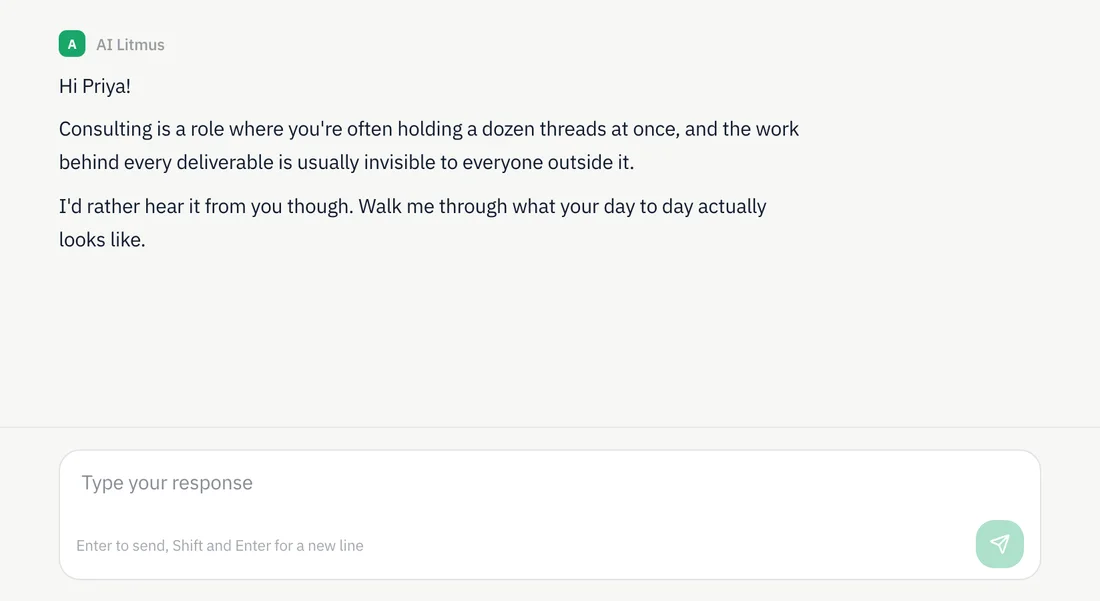
A conversation, not a form
EveryoneIt opens by telling them what it already understands about their role, then asks them to describe their own week. Nothing is scored while they talk, and it says so.
Then they actually use AI, on a real brief
EveryoneA colleague sends them a messy request with a constraint buried in it. They write the prompt. The model answers. This is the part a multiple-choice quiz cannot reach.
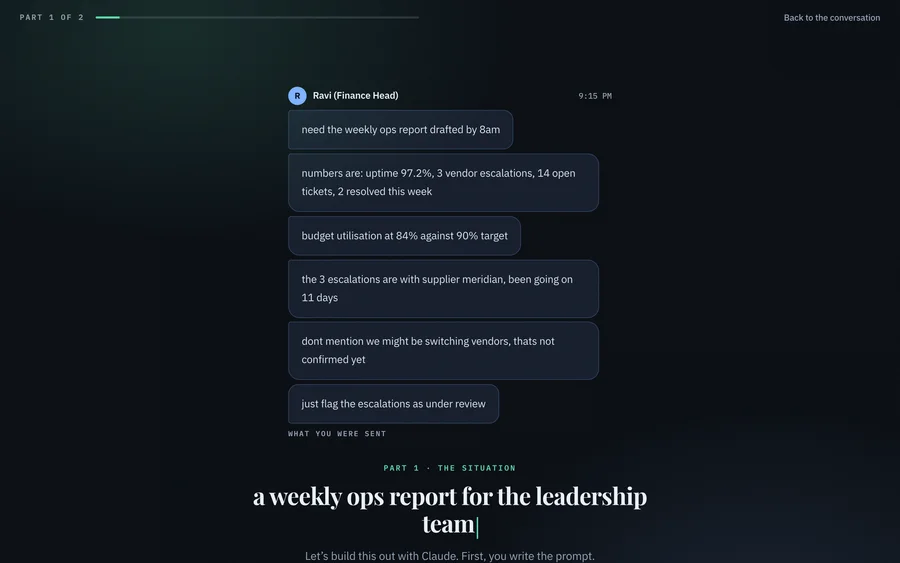
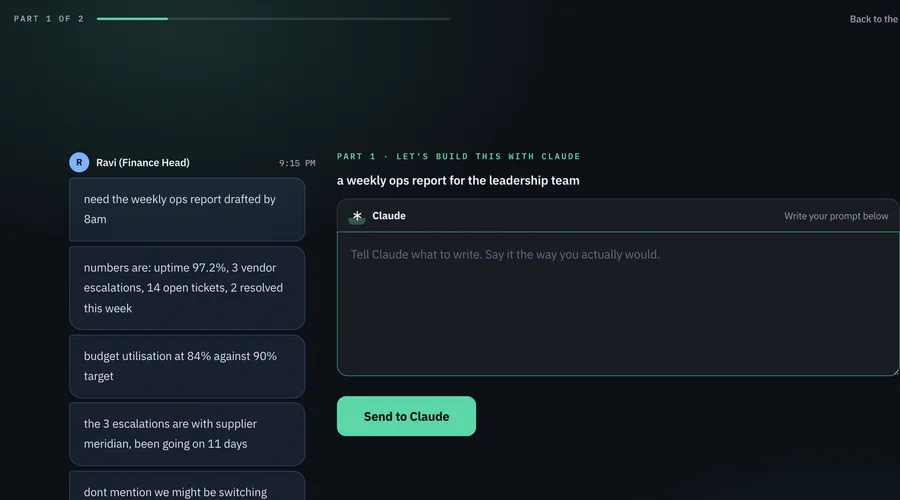
Every situation is built to look like their own day to day, the kind of request that actually lands in their inbox on a Tuesday. We ask them to handle it exactly the way they would in real life. Nobody is describing how they work. They are just working.
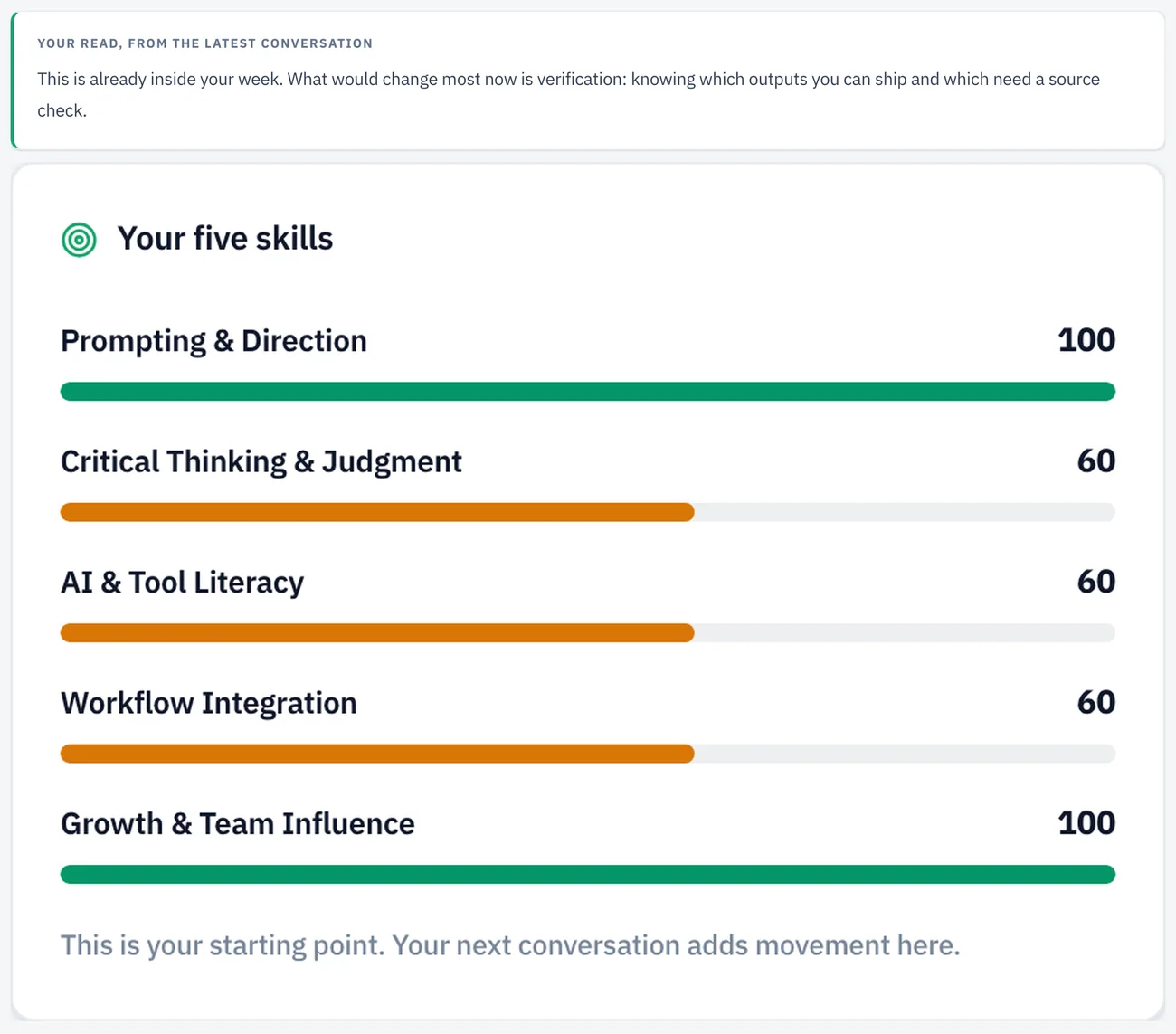
The read comes back, and it is theirs
Each personOne honest paragraph about what would change their week most, then five skills scored against what their role needs rather than against everyone else in the company.
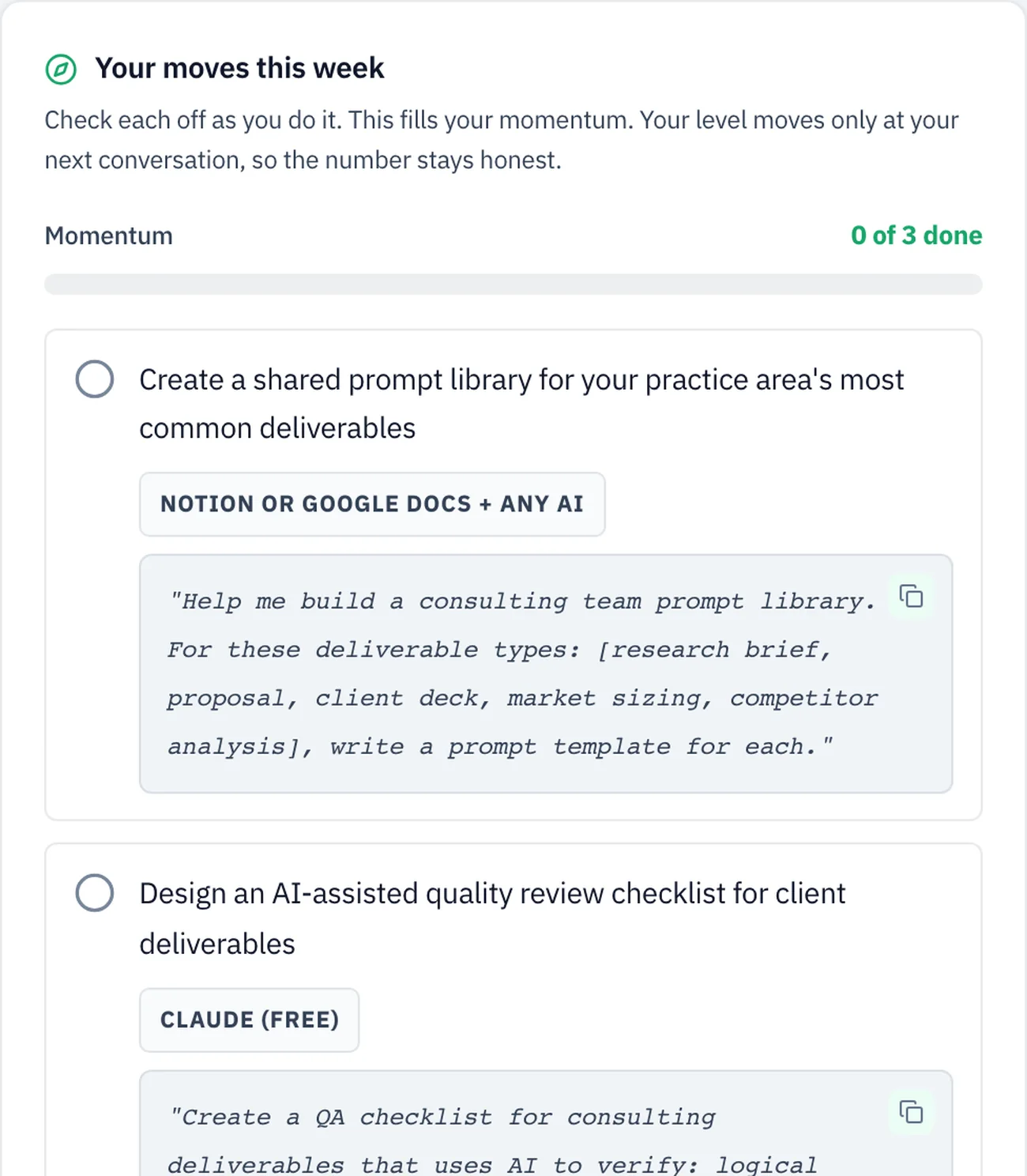
Three moves for this week
Each personSpecific to their job, each with the tool to use and a prompt they can paste today. Not a course to enrol in. Something to do on Monday.
Their own page, private, and it keeps going
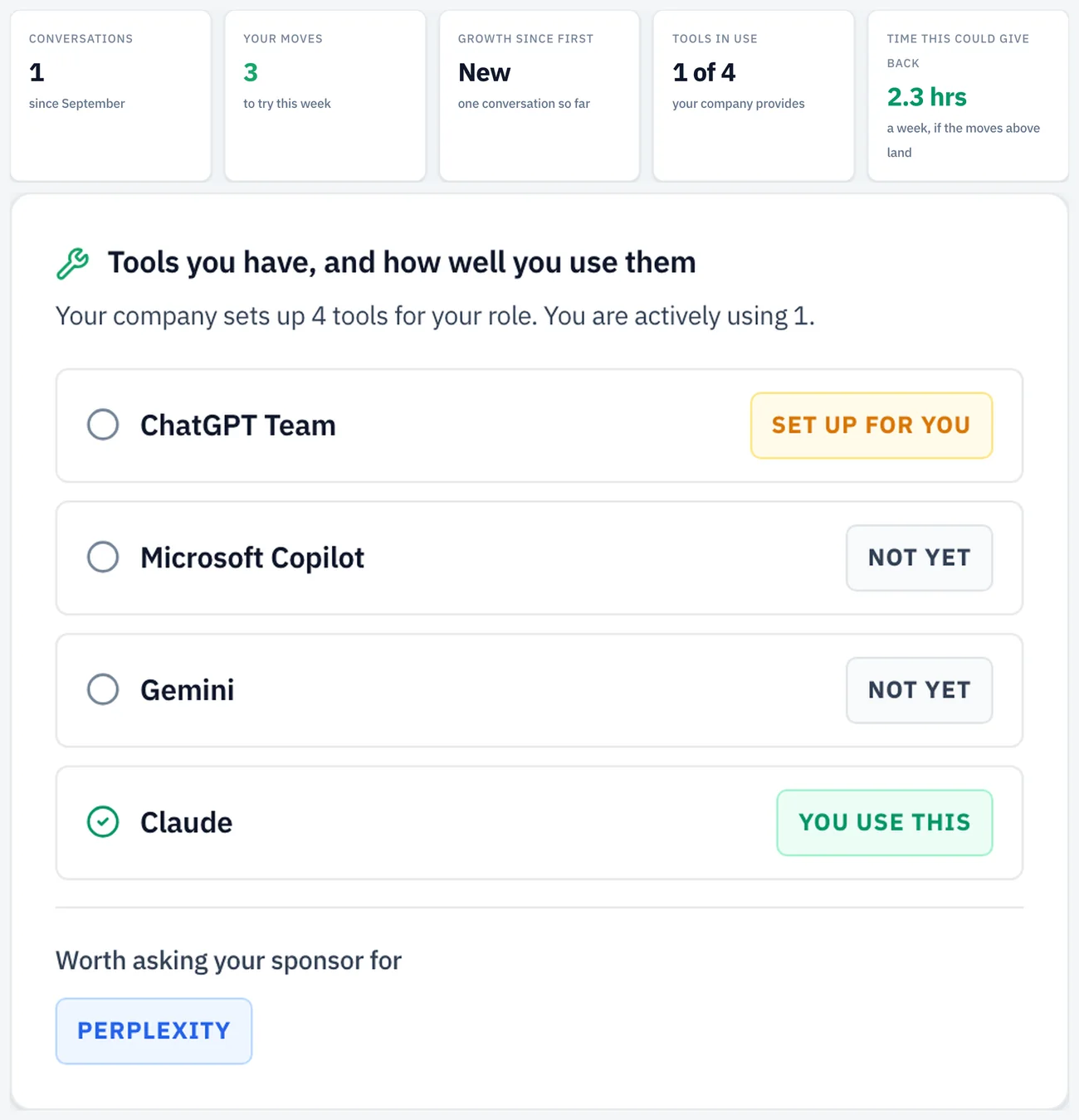
Each personHours it could give back, which of your tools they actually use, what to ask you for, and a line that grows every time they come back. Their manager cannot see it.
Ownership of their own growth is not a nice line. It is the mechanism.
They can put a password on it. Their manager never sees a named result, and the page says so before the first question.
No pass mark, no ranking, no certificate. Someone who admits they do not verify output is giving you the most useful answer in the set.
Three moves and a prompt they can paste. The value arrives before any workshop is booked, which is what makes the second conversation happen.
Watch this run for one of your teams.
A private conversation per person, a role-calibrated read of how well they use what you already own, and the exact enablement move for their leader. About two weeks.